
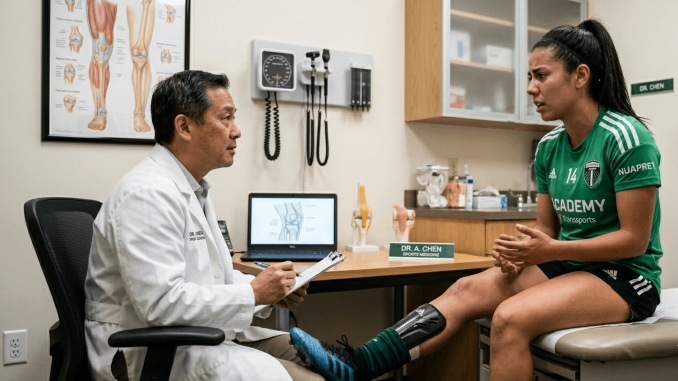
There is a point in every recurring injury where the pattern becomes impossible to ignore. You rest. You return. You get hurt again. The injury might be different each time. Some days a slightly different part of the ankle, a new area of the knee or it might be exactly the same, in exactly the same spot, for the third or fourth time in a season.
At some point, rest stops feeling like a treatment plan and starts feeling like delay. That is usually the moment athletes begin to take a more serious look at what is actually going on.
To understand what that process looks like in practice, we spoke with the team at Applied Motion Physiotherapy in Perth, who work with athletes across a wide range of sports and age groups. This article follows the journey from that frustrating early cycle of reinjury, through a structured course of sports physiotherapy, to returning to full training with a clearer understanding of how to stay there.
The First Few Weeks: Why the Injury Is Not Going Away
Most athletes manage minor injuries the same way. Stop training, let the pain settle, return when it feels better. For straightforward acute injuries, this works well enough. For recurring ones, it rarely does.
The reason comes down to what rest actually addresses. Pain and swelling reduce with time and reduced load, but the underlying factors that caused the injury. Movement patterns, muscular imbalances, training load spikes, joint instability remain exactly as they were. When the athlete returns to training, those same factors are still present, and the tissue that was injured has often not been rehabilitated to the level needed to tolerate sport again.
The result is the rest-return-reinjury cycle. It is extremely common, and it is not a reflection of the athlete’s pain tolerance or commitment. It is a structural problem with the approach. Managing pain is not the same as managing the injury.
For many athletes, the cycle continues until the accumulated disruption to training becomes the primary concern. Missed matches, lost fitness, interrupted preparation for a season or competition. These are often what finally prompt a different course of action.

Deciding to Get Proper Help
The first appointment with a sports physiotherapist is usually more thorough than athletes expect. The assessment goes well beyond the site of pain. A sports physio will look at how you move, how you load the injured area under controlled conditions, what your training history looks like, and how the injury has behaved over time.
This breadth of assessment matters because recurring injuries rarely have a single cause. A recurrent ankle sprain might involve inadequate strength in the hip, poor single-leg stability, a previous sprain that was never fully rehabilitated, or a combination of all three. Identifying the contributing factors is the foundation of a treatment plan that actually addresses the injury rather than its symptoms.
The assessment also produces a clearer picture of timeline. One of the more useful things a first appointment delivers is a realistic sense of what recovery involves. How long rehabilitation is likely to take, what modified training might look like in the interim, and what milestones indicate progress.
For athletes who have been managing an injury largely on their own, this structure is often a significant shift. Recovery stops being an undefined waiting period and becomes a process with identifiable stages.
What Applied Motion’s Approach to Sports Physiotherapy Actually Involves
General physiotherapy and sports physiotherapy share a clinical foundation, but they diverge significantly in focus and application. Sports physiotherapy is oriented specifically toward the demands of athletic activity. The loads, movement patterns, and performance requirements that general clinical practice does not always account for. For an athlete dealing with a recurring injury, that distinction matters.
Applied Motion Physiotherapy in Perth work with athletes across a broad range of sports and age groups, from junior club-level competitors through to national and international athletes. Their team includes physiotherapists who have competed at a high level themselves. This shapes the way they approach both assessment and rehabilitation. Understanding what a sport actually demands of the body, physically and psychologically, informs the treatment plan in ways that are difficult to replicate without that background.
In their experience, one of the most common gaps in athlete rehabilitation is a programme that restores pain-free movement but stops short of restoring the capacity needed to return to sport safely. An athlete who can walk without pain is not necessarily ready to sprint, change direction, or compete at training intensity. Bridging that gap requires a progressive and sport-specific approach to loading, one that builds toward the actual demands of the sport rather than stopping at the absence of symptoms.
Applied Motion’s caseload reflects this. They work regularly with athletes presenting with ankle injuries and instability, knee injuries including ACL tears, shoulder presentations, back pain and spinal stress fractures, and hypermobile joints, conditions that each require a different understanding of how load and movement interact. Their formal involvement with the Gymnastics State Team across multiple disciplines has also given them particular depth in managing the complex presentations that arise in aesthetic and acrobatic sports.
This becomes especially relevant for younger athletes, whose bodies are still developing and who face a distinct set of injury risks as a result. Growth-related conditions, open growth plates, and the psychological impact of repeated injury all factor into how rehabilitation is structured for adolescent and junior athletes. Applied Motion treat paediatric sports injuries as a distinct clinical area, recognising that the approach taken with a developing athlete needs to account for their stage of growth, not just the site of pain.
The Middle Stretch: Doing the Work
The most demanding part of recovery is not the acute phase. It is the middle stretch, where pain has largely settled but full training is still weeks away. This period requires consistent effort with limited immediate reward, and it is where many rehabilitation programmes lose momentum.
A well-structured sports physiotherapy programme addresses this through progressive loading. Rather than a binary of rest or full return, the athlete moves through a series of stages, each one increasing the demand placed on the injured area in a controlled and measurable way. Strength work, controlled movement under load, sport-specific drills, and gradually increasing training volume are introduced in sequence.
Modified training during this period is not a compromise. It serves a clinical purpose. Keeping the athlete physically active in ways that do not aggravate the injury maintains fitness, preserves movement quality, and supports the psychological continuity of being an athlete in training rather than an injured person on the sideline.
Setbacks happen. A session that was too intense, a day where symptoms flare without obvious cause, these are part of the process rather than signs that rehabilitation has failed. Learning to read them accurately, to distinguish between the expected discomfort of progressive loading and the warning signs of genuine aggravation, is one of the practical skills a good rehabilitation programme builds.
Return to Sport and What Comes After
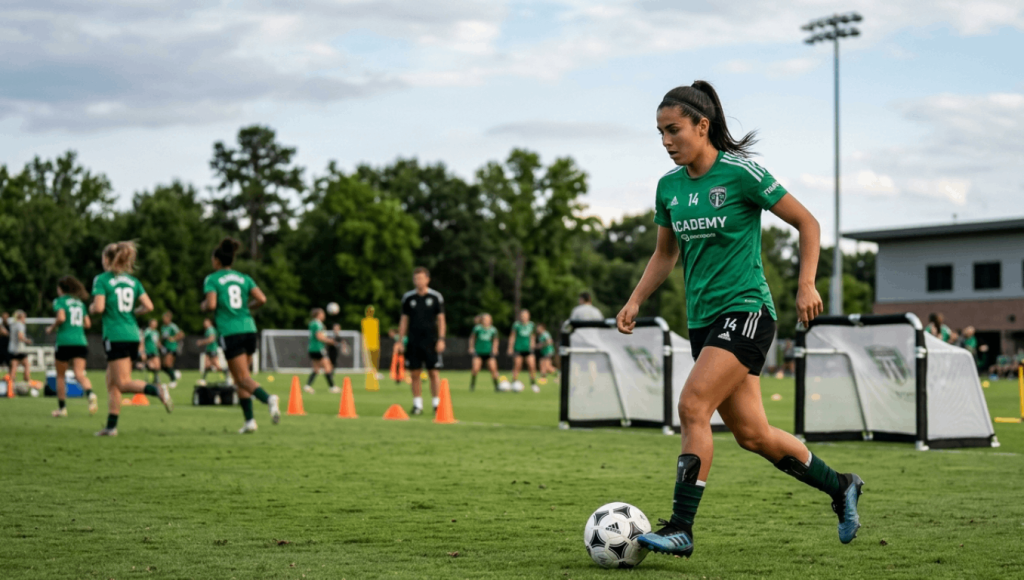
A structured return to sport is not simply resuming training at the point where it was interrupted. It involves a graduated reintroduction of the specific demands of the athlete’s sport, speed, contact, reactive movement, competition intensity, with checkpoints along the way to confirm the injured area is tolerating the increased load.
Confidence is rebuilt alongside physical capacity, and the two do not always move at the same pace. Athletes who have experienced repeated injury often develop a protective relationship with the injured area, bracing instinctively, avoiding certain movements, or pulling back under load even when the tissue is capable of more. Addressing this is part of a thorough return-to-sport process, not a separate concern.
By the end of a well-managed rehabilitation programme, the athlete returns to full training with more than just a recovered injury. They leave with a clearer understanding of how their body responds to load, what early warning signs look like, and how to manage training volume in a way that reduces the likelihood of the same injury recurring.
Load management, adequate recovery between sessions, sport-specific conditioning, and the ability to recognise when to pull back are not advanced athletic concepts. They are practical tools that any athlete can apply, and they are typically part of what a sports physiotherapist works through with their patients before discharging them.
The Injury That Became a Reference Point
Athletes who have been through a thorough course of sports physiotherapy often describe a shift in how they relate to their body. The recurring injury, which once felt like an unpredictable liability, becomes something understood. A site that requires particular attention, managed with specific strategies, rather than something that simply happens to them.
That shift is not incidental. It is one of the more durable outcomes of good rehabilitation. The injury does not disappear from the athlete’s history, but it stops defining their relationship with training. Recovery, in that sense, is less about returning to where things were before and more about arriving at a position of greater understanding and resilience than existed prior to the injury.
For athletes still in the rest-return-reinjury cycle, that outcome is worth pursuing.